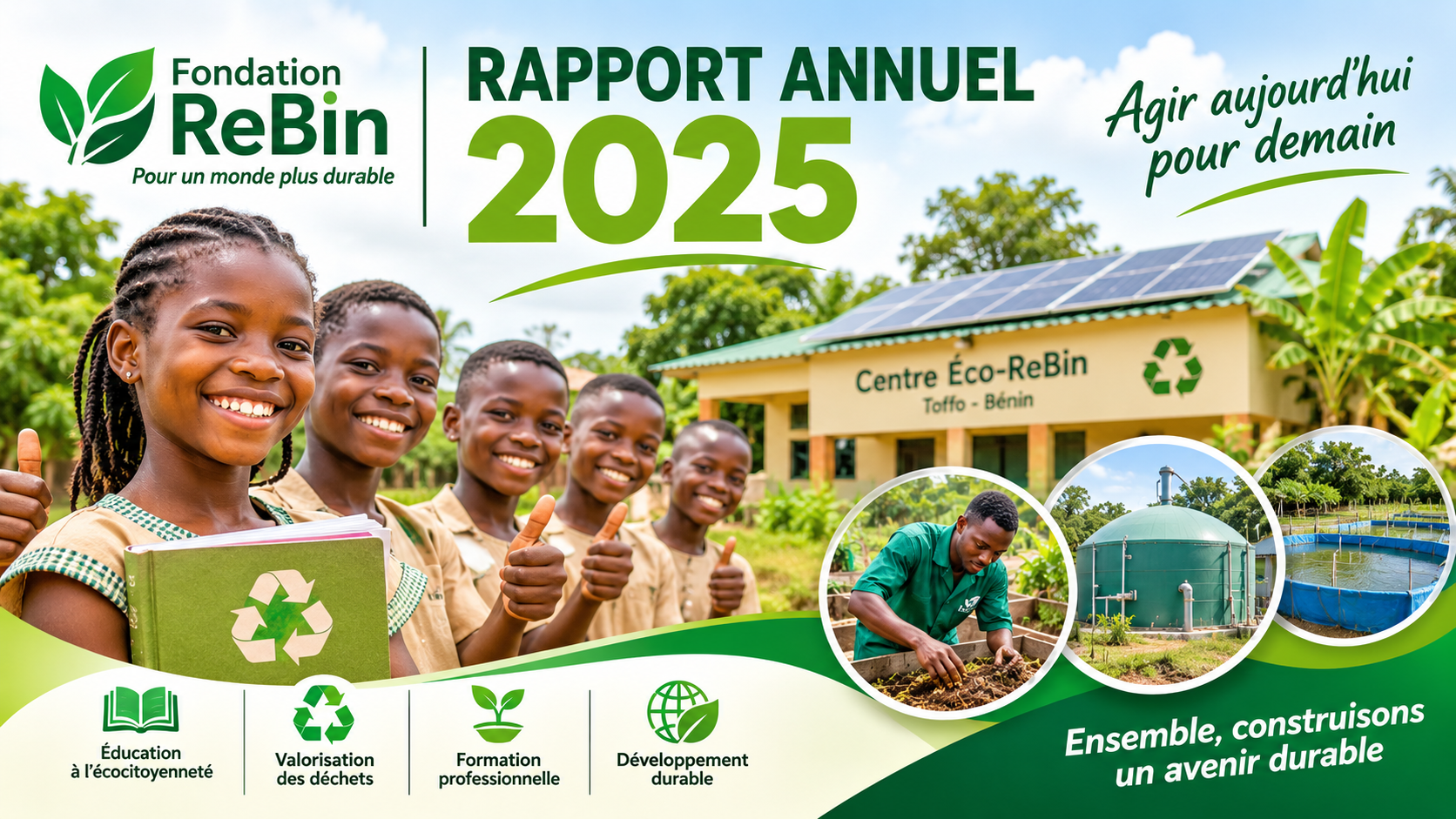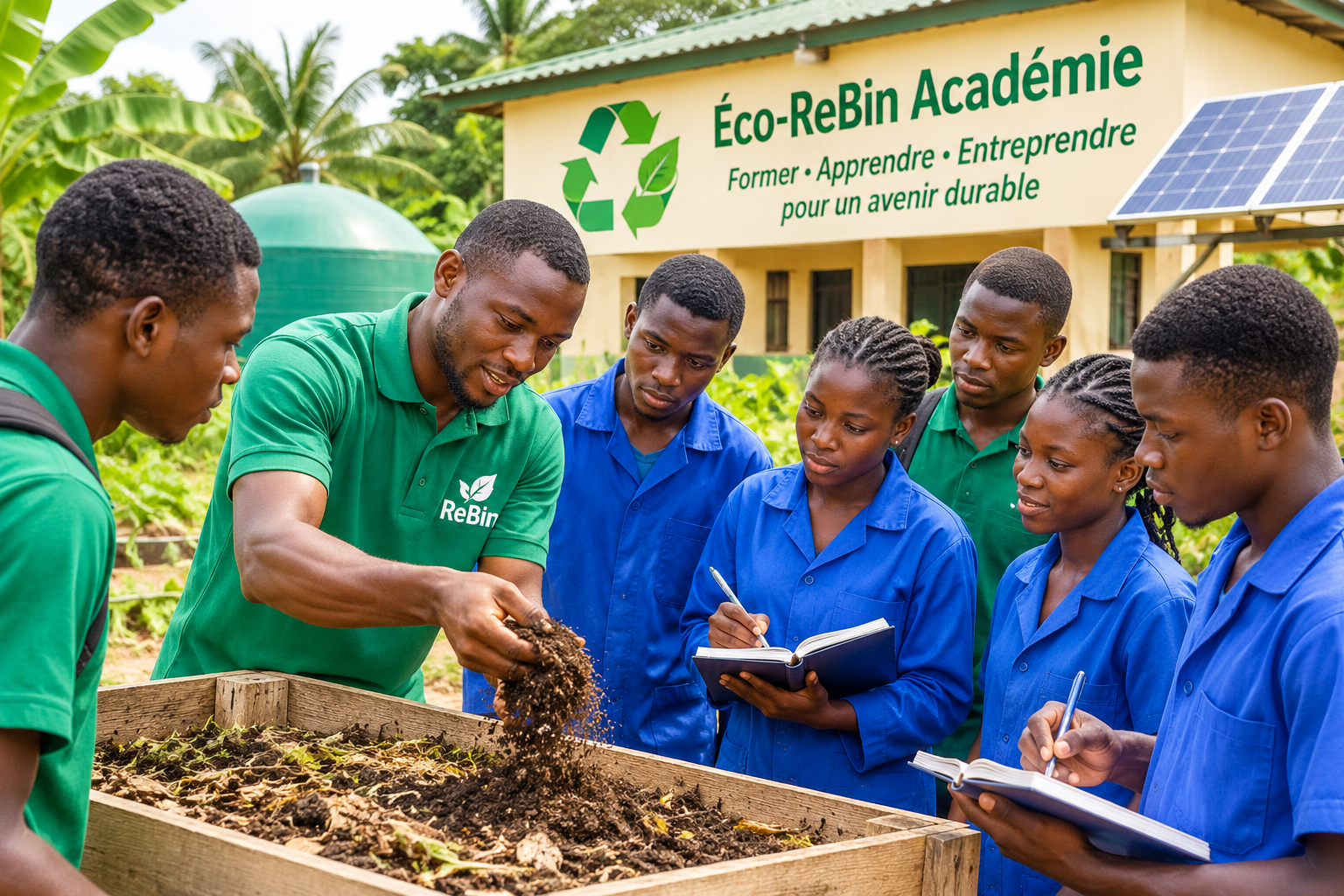
Eco-ReBin Academy in Toffo : a new ambition for training in green professions
To make the Eco-ReBin Center a hub for training, learning, and entrepreneurship in support of the ecological transition in Benin.
Following several years of experience in waste recovery and the development of environmental solutions, the NGO Centre Éco-ReBin is embarking on a new phase of its growth. Through the Eco-ReBin Academy project, the organization aims to reposition its Toffo center—located in the Houègbo district—as a dedicated hub for vocational training and learning focused on “green” professions.
This new direction addresses several major challenges: youth unemployment, a lack of technical training tailored to local needs, the necessity of developing new professional skills, and the economic opportunities linked to the ecological transition.
A new strategy for the Éco-ReBin Centre
The ambition is to gradually evolve the Eco-ReBin Center—operational since 2018—into a practical and technical training hub, capable of welcoming young people, apprentices, women, and aspiring entrepreneurs who wish to acquire skills in the fields of the environment, sustainable agriculture, and the circular economy.
This strategy is based on an integrated approach. : leverage local resources, produce sustainably, pass on expertise, create economic activities, and contribute to environmental protection.
The Centre should therefore not merely be a place for demonstrating environmental technologies; rather, it should become a genuine tool for local development, combining training, experimentation, production, and professional integration.
The ReBin Foundation will support this development by providing its expertise, mobilizing technical and institutional partners, and seeking the funding required to carry out the program.
Practical training programs focused on the professions of tomorrow
Eco-ReBin Academy will progressively develop training modules that combine theoretical instruction, practical learning, and field experience.
Several areas are identified as priorities:
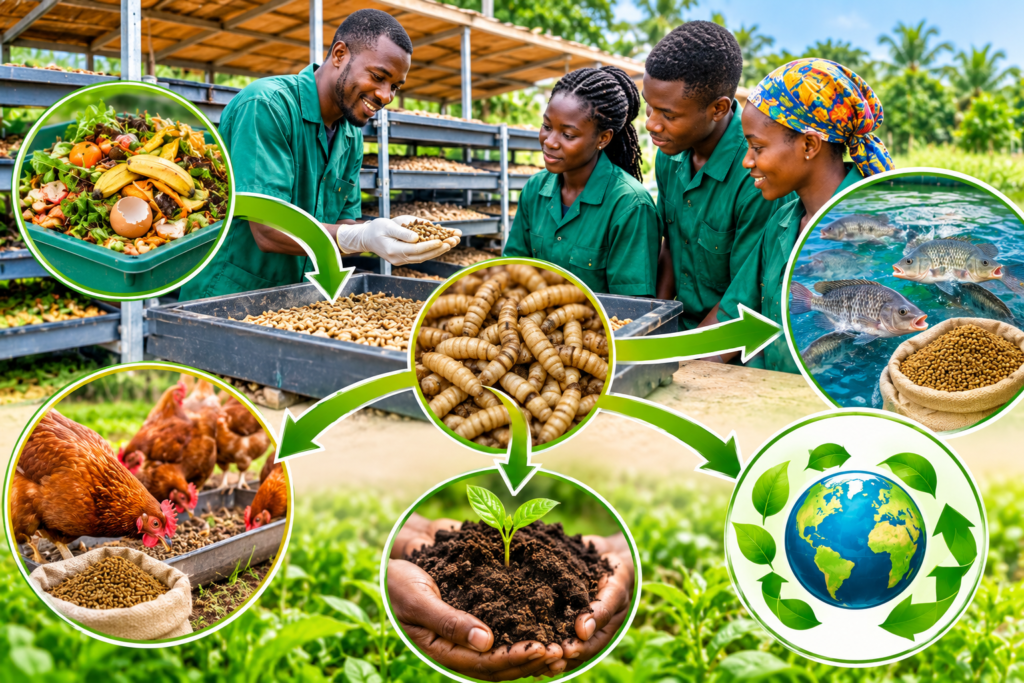
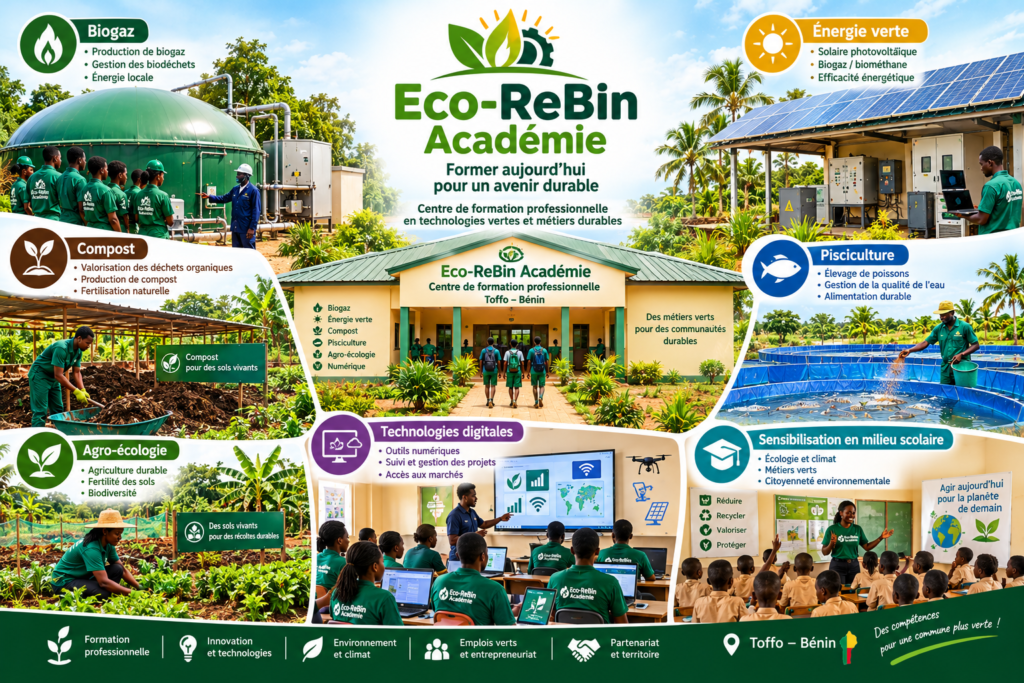
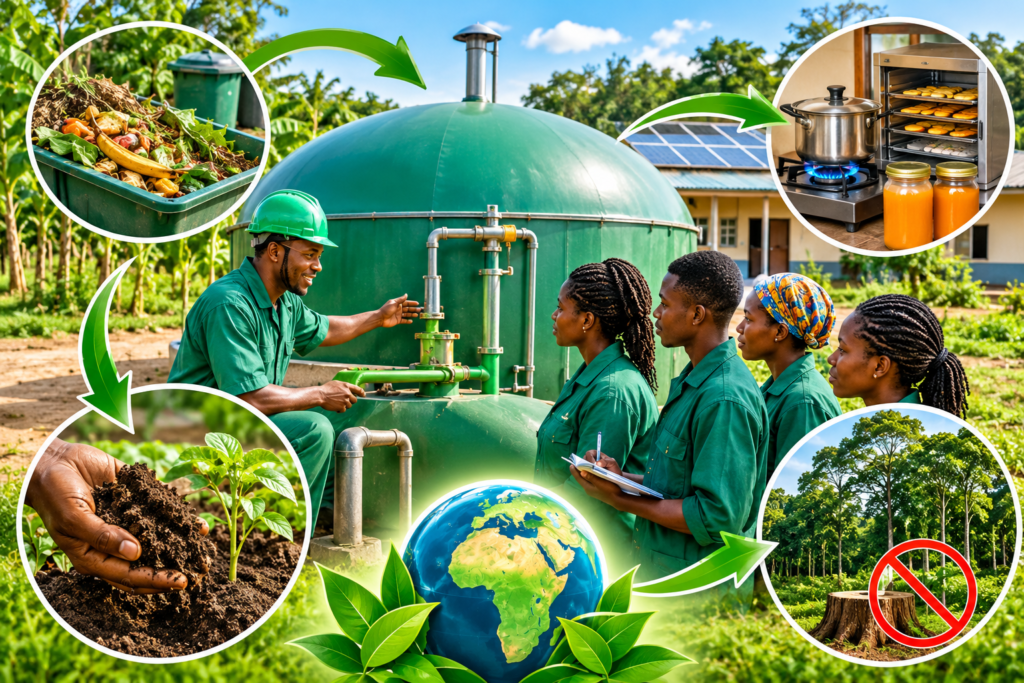
- Waste management and valorization: sorting, recycling, composting, and transforming organic waste into useful resources.
- Renewable energies: production and use of biogas, energy solutions tailored to the needs of communities and small-scale economic activities.
- Sustainable agriculture and agroecology: fOrganic fertilization, use of compost and digestate, soil management, and environmentally friendly agricultural practices.
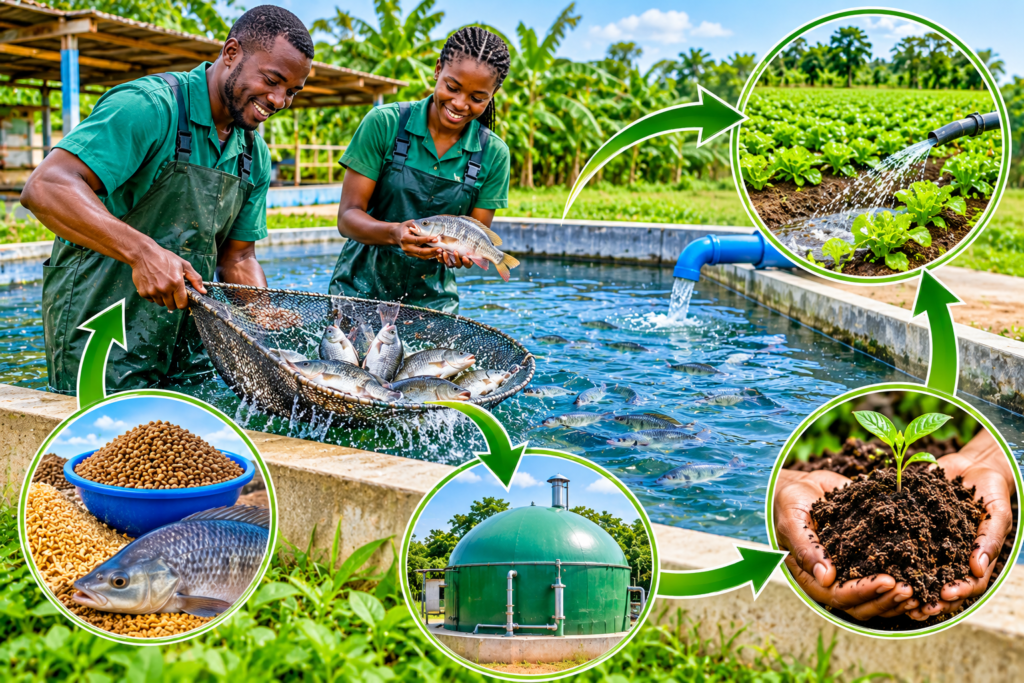
- Fish farming: production techniques, pond management, and the utilization of aquaculture products.
- Processing and adding value to local produce: development of small, income-generating economic activities.
- Environmental technologies and innovations: discovery and use of equipment and processes adapted to local realities.
Learning will play a central role in this initiative. Beneficiaries will be able to train directly at the center’s facilities, take part in technical activities, and acquire practical skills in real-world conditions.
Ultimately, the goal is to develop a vocational training center with partnerships involving relevant institutions in Benin, with the aim of providing recognized training programs and pathways that lead to professional qualifications.
Training young people to foster employment and entrepreneurship
Vocational training is a key lever for addressing the challenges of youth employment. It helps align the skills acquired with the actual needs of businesses, local authorities, and local economic activities.
In Toffo and the surrounding communes, professions related to the environment, sustainable agriculture, and resource valorization offer development opportunities that remain insufficiently tapped.
Eco-ReBin Academy thus aims to foster:
- young people’s access to technical and vocational training;
- the acquisition of skills directly applicable in the field;
- professional integration and access to employment;
- the creation of small businesses and income-generating activities;
- women’s participation in new green economic sectors;
- the transmission of expertise and the development of local initiatives.
The goal is not merely to train beneficiaries, but to help foster a new generation of professionals capable of proposing environmental and economic solutions tailored to their local area.
A local and international partnership to bring the project to fruition
The success of this new strategy relies on close cooperation between several stakeholders.
The Commune of Toffo is expected to act as an institutional partner, notably by facilitating the project’s integration into the local area, identifying local needs, and fostering synergies with municipal initiatives.
The NGO Centre Eco-ReBin will oversee the development and implementation of field activities, the management of the center, and the organization of training sessions.
The ReBin Foundation will provide strategic and technical support, contribute to the mobilization of partners, and secure funding from its partners in Switzerland and internationally.
Collaborations with educational institutions, professionals, businesses, and public organizations will also be sought in order to enhance the quality of instruction and improve learners’ prospects for professional integration.
A need for funding to get started in 2027
Implementing the Eco-ReBin Academy requires the gradual reactivation of the center, the mobilization of a coordination and technical supervision team, the maintenance of existing infrastructure, the acquisition of specific educational and technical equipment, and funding for the initial training cycles.
The program includes, in particular, funding for:
- general coordination and administrative and financial management;
- the recruitment and remuneration of a technical and pedagogical team;
- the restoration and maintenance of the installations;
- the purchase of materials and equipment intended for training purposes;
- the organization of learning modules and the supervision of beneficiaries;
- monitoring of training, evaluation of results, and development of partnerships.
A preliminary request for support has been submitted to the Canton of Geneva, within the framework of its international cooperation mechanisms. At the same time, the ReBin Foundation is reaching out to municipalities in Geneva, private foundations, and other potential partners who might contribute to the project’s funding.
The goal is to assemble the necessary resources to launch an initial operational phase in 2027 and gradually build a sustainable training model.
Your support can make a difference!
Following a 2026 that proved particularly difficult for the funding of our activities, the support of our partners and donors is now essential.
We wish to mobilize public authorities, businesses, foundations, educational institutions, and individuals around this shared ambition.
Financial support can help equip workshops, fund instructors, welcome the first apprentices, or ensure the center’s ongoing operations. A technical partnership—or the provision of equipment and expertise—can also make a decisive contribution.
Supporting Eco-ReBin Academy means investing in the skills of young people, fostering local employment, and helping to build a more environmentally friendly economy.
In 2027, let’s help the young people of Toffo turn environmental challenges into professional and economic opportunities!
ReBin Foundation – For a more sustainable world.
Share this article